Plain Language
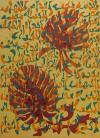
Malika Agueznay, Le Paradis sous les pas des mères (1996). Photo: Hamadi Ananou. Courtesy Mehdia Agueznay.
Presentation
This guide was created to help you learn more about the 36th Bienal de São Paulo. The Bienal welcomes many visitors with different backgrounds, ages, cultures, and ways of living and expressing themselves. This diversity is important. It helps make the Bienal a place for everyone. The title of the 36th Bienal de São Paulo is Not All Travellers Walk Roads – Of Humanity as Practice. This is the official exhibition poster.

Visual: Studio Yukiko / Fundação Bienal de São Paulo
The teams from the 36th Bienal de São Paulo and Haus der Kulturen der Welt are here to help you. They can welcome you, answer your questions, support your visit, and give you information. The 36th Bienal was prepared with great care. We want everyone to feel welcome. We hope you enjoy your visit!
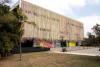
In Brazil, the Bienal de São Paulo happens mainly at the Ciccillo Matarazzo Pavilion, inside the Ibirapuera Park. This building is a work of the Brazilian architect Oscar Niemeyer. Photo: © Natt Fejfar / Fundação Bienal de São Paulo
Summary
Presentation What is the Bienal de São Paulo? About the title of the 36th Bienal de São Paulo Who organizes the Bienal de São Paulo? About the concept and curatorial project of the 36th Bienal de São Paulo Travelling exhibition of the Bienal de São Paulo at the Haus der Kulturen der Welt About the artworks and artists Alberto Pitta Ana Raylander Mártis dos Anjos Juliana dos Santos Lidia Lisbôa Malika Agueznay Mao Ishikawa Maria Auxiliadora Accessibility resources Credits
What is the Bienal de São Paulo?
The Bienal de São Paulo is an art exhibition held every two years in the city of São Paulo, Brazil. The first Bienal took place in 1951. The Bienal has existed for more than 70 years. The 36th Bienal de São Paulo took place in 2025. The Bienal de São Paulo is one of the largest art exhibitions in the world. It is an exhibition of contemporary art. Contemporary art is the art of our time. It includes art made over the past 60 years. The Bienal has three main goals:
– To support artistic creation.
– To encourage discussion in society.
– To make culture accessible to everyone. Many people visit the Bienal. In 2025, more than 780,000 people visited the exhibition. The Bienal has an education team that works to make sure everyone can take part in and enjoy contemporary art.

Image of an artwork at the Bienal de São Paulo in Brazil © Natt Fejfar / Fundação Bienal de São Paulo
About the title of the 36th Bienal de São Paulo
Not All Travellers Walk Roads – Of Humanity as Practice
The title is inspired by the poem "Of Calm and Silence" by the Brazilian writer Conceição Evaristo. It was chosen to invite reflection. A traveller is someone who travels. A traveller can also be someone who is always moving through life. The title of the 36th Bienal invites artists and visitors to think of life as a process of change and transformation.

Photo of Conceição Evaristo © Levi Fanan / Fundação Bienal de São Paulo
Who organizes the Bienal de São Paulo?
About Fundação Bienal de São Paulo and the curatorial team
Fundação Bienal de São Paulo is a private, non-profit institution. It organizes the Bienal de São Paulo and other cultural projects, such as the Brazilian Pavilion at the Venice Biennale. The Fundação also has a historical archive of modern and contemporary art. The archive preserves and organizes books, photographs, newspaper articles, videos, and other important documents. It is called the Arquivo Histórico Wanda Svevo. It is one of the most important art archives in Latin America. The 36th Bienal de São Paulo has a chief curator. A curator develops the exhibition's main concept and selects the artworks that are part of the Bienal. The chief curator of the 36th Bienal is Prof. Dr. Bonaventure Soh Bejeng Ndikung. He was born in Cameroon. He now lives in Berlin and is the director of Haus der Kulturen der Welt. He is a professor, writer, and curator. He invited other professionals to join the conceptual team that developed the 36th Bienal de São Paulo. The photograph below shows the conceptual team in the Bienal building.

From left to right, Keyna Eleison, Alya Sebti, Bonaventure Soh Bejeng Ndikung, Henriette Gallus, Anna Roberta Goetz, and Thiago de Paula Souza © João Medeiros / Fundação Bienal de São Paulo
About the concept and curatorial project of the 36th Bienal de São Paulo
The 36th Bienal de São Paulo invites us to think about the role of humanity in today's world.
We live in a time shaped by many different kinds of crises:
– Social crises
– Political crises
– Environmental crises The Bienal shows that when there is injustice, people can respond by changing the way they relate to one another. For example, we can work to reduce inequality. We can care for one another. We can live together with respect. To explore these ideas, the conceptual team developed the main themes of the Bienal and selected the participating artists. One important idea is to think of society as an estuary. An estuary is a place where rivers and lakes meet the sea. Fresh water and salt water mix together there. Estuaries are rich in nutrients. They support many kinds of plants and animals.

Estuary of the Río de la Plata
There are many estuaries in Brazil and across Latin America. Many estuaries are at risk. Some are close to cities that pollute the water. This harms the plants and animals that live there. Now that you know what an estuary is, we invite you to imagine something. Imagine that the 36th Bienal is like an estuary. The artists come from different places and have different life experiences. At the Bienal, these different perspectives come together. They invite us to imagine a world where everyone has a place. The Bienal wants to be like an estuary that welcomes and supports many forms of life. The curators hope the Bienal will be a living space that brings together communities, art, education, and culture. The Bienal is inspired by the landscapes and histories of Brazil and other parts of the world. Through art, it reflects the encounters between different cultures that have shaped Brazil's history. The Bienal invites people to come together and create change. This can happen when we listen to one another and value different ways of living. This is why the Bienal is called Not All Travellers Walk Roads – Of Humanity as Practice. This title comes from a poem by Conceição Evaristo. It introduces one of the Bienal's main ideas. Everyone needs time and space. It is important to slow down and pay attention to small details. When we do this, we notice other people and other living beings around us. The Bienal wants to help society create paths for interaction and respect. It invites us to imagine a different world, where joy, beauty, and poetry are at the centre of our lives. It also invites us to imagine a world where every person is valued. This is especially important at a time when many people are being left behind by society.
Travelling exhibition of the Bienal de São Paulo at the Haus der Kulturen der Welt
For the first time, a travelling exhibition of the Bienal de São Paulo is being presented at the Haus der Kulturen der Welt and in Germany. A travelling exhibition is an exhibition, or part of an exhibition, that is shown in another city or country. This allows more people to experience the Bienal. The exhibition in Berlin is part of the 36th Bienal de São Paulo. It brings together works by 32 artists and collectives selected by curator Alya Sebti. The exhibition design for the 36th Bienal de São Paulo was created by architects Gisele de Paula and Tiago Guimarães. For the Berlin presentation, Gisele de Paula adapted the design to the spaces of the HKW. Exhibition design includes decisions about how artworks are arranged in the space, as well as the colours and materials used. These choices help visitors experience the curatorial proposal. In this exhibition, the design is inspired by the movement of rivers and estuaries. As you walk through the exhibition, you are invited to slow down. There are spaces for looking, listening, and taking time with the artworks. The colourful curtains recall the edges of rivers. They suggest landscapes that are always changing. Like travellers, visitors do not have to follow a single route. Each person can choose their own path through the exhibition. The visual identity of the 36th Bienal de São Paulo was created by the Berlin-based design studio Yukiko. The design is inspired by sound waves and estuaries, where different waters meet and mix. It reflects the main ideas of the Bienal: listening, encounter, and exchange. The visual identity reminds us that people, ideas, and cultures can come together, learn from one another, and create new ways of living together.
About the artworks and artists
The travelling exhibition of the 36th Bienal de São Paulo in Berlin features the participation of 32 artists and collectives. The artists live and work in different parts of the world. In this Bienal you may find:
– Paintings – Installations – Sculptures – Photographs – Videos Sound is loud in many works in the exhibition. Now we will learn more about some artists in the show.
Alberto Pitta
Alberto Pitta has been an artist for more than 40 years. He mainly works with printed textiles and screen printing. These are techniques used to print images onto fabric and paper. In recent years, he has also created paintings and sculptures. His work is inspired by Afro-Brazilian cultures and by the African heritage in Brazil. Fabric is the main material in his work. He uses it to connect art, history, and community. Alberto Pitta grew up in a Candomblé community in Salvador, Brazil. Candomblé is an Afro-Brazilian religion. It brings together traditions, music, ceremonies, and ways of life that come from different African cultures. His mother, Mãe Santinha de Oyá, was a Candomblé spiritual leader, an educator, and an embroiderer. For Alberto Pitta, the traditions of Candomblé are also a form of art. Since the 1980s, he has created costumes and textile designs for Afro-Brazilian Carnival groups, including Ilê Aiyê, Olodum, Filhos de Gandhy, Oba Laiyê, and Afoxé Filhos do Congo. In 1998, he founded Cortejo Afro. His work is known for its strong colours, patterns, and layered designs. His fabrics tell stories about memory, history, and community. His artworks have been shown in many museums and exhibitions around the world. Through fabric, Alberto Pitta creates connections between Brazil and Africa. His work brings together different cultures and celebrates the traditions of the African diaspora.
Ana Raylander Mártis dos Anjos
Ana Raylander Mártis dos Anjos creates artworks based on long-term research. She connects her own story with the stories of many other people. The artwork shown in this travelling exhibition is an installation called Bené's House. To create it, the artist researched her family history. She used objects from the mud-and-wood house of her great-grandfather, Benedito Cândido. Bené is his nickname. The house no longer exists, but the objects keep its memory alive. Through this work, Ana Raylander shows how her great-grandfather influenced her ideas, her values, and her artistic practice. The installation includes tall wooden columns covered with fabric, natural fibres, wool, cotton shirts, and leather strips. The colours are mainly beige, brown, black, yellow, and red, recalling earth and natural materials. The work also includes baskets, sculptures, and objects from her great-grandfather's house. These objects help tell stories about family, memory, and belonging. The baskets are made from natural fibres. Inside them are textile forms made by twisting and weaving threads together. They also refer to the region where the artist was born, in the state of Minas Gerais, Brazil. There, mining exists alongside traditional basket weaving. Together, all the elements of the installation tell stories about family, place, history, and community.
Lidia Lisbôa
Lidia Lisbôa was born in the state of Paraná, Brazil, and lives in São Paulo. She creates sculptures, crochet works, performances, and drawings. Her work explores memory, the body, family history, and transformation. Crochet is an important part of her artistic practice. Through weaving, she creates artworks about care, resilience, and memory. The works in this exhibition are part of the series Tetas que deram de mamar ao mundo. They are a tribute to women and to the act of nourishing life. The exhibition includes three large crochet sculptures hanging from the ceiling. Their rounded shapes remind us of breasts. Each sculpture has different colours. One is beige. Another is burgundy, wine red, and purple. The third is black, brown, and burnt orange. The sculptures invite us to think about care, motherhood, memory, and the strength passed from one generation to the next.
Juliana dos Santos
Juliana dos Santos was born and lives in São Paulo, Brazil. She is a visual artist. She works with installation, video, painting, performance, and photography. The artist explores the blue colour that she creates from a flower called Clitoria ternatea. Through this colour, she expresses feelings, ideas, and memories. Her research connects art, history, and education. Juliana studies how Black artists tell their stories and the challenges they face in being represented. For the artist, the blue from this flower is a way of feeling and sharing experiences. It is something that can be experienced by everyone. Juliana explains that the colour blue became part of her work as a way to speak about different aspects of the reality of being a Black person in a society marked by violence and inequality. The work presented in this exhibition is part of the series Sopro/aragem/viração. The four new paintings were created especially for this travelling exhibition and are called Sul do Sul (2026). Like the other works in the series, they were made with petals of the Clitoria ternatea flower, watercolour, and acrylic paint on canvas. The paintings show different shades of blue and the movement of diluted paint across the surface. The paths created by the colour look like drawings made by water or air. The work creates a space where different forms and colours come together. It is inspired by textile traditions such as quilt and patchwork, combining organic shapes and geometric patterns. The artist invites visitors to observe how the blue colour changes over time. These transformations remind us that nature has its own rhythms and that things are always in movement.
Malika Agueznay
Malika Agueznay is an important artist from Morocco. She was one of the first women in her country to create abstract art. Abstract art uses shapes and colours that do not try to represent reality exactly. Malika was part of the modern art movement in Morocco. At the Casablanca Art School, she met artists and teachers who were searching for new ways of creating art in the country. Together, they used art to think about important topics such as politics and society. They created works with strong colours, shapes, lines, and geometric forms. Malika developed her own artistic practice using different materials and techniques. Throughout her life, she continued researching forms inspired by nature, especially seaweed. In 1978, Malika Agueznay learned the technique of printmaking. Printmaking is a way of creating images by drawing or carving a design on a surface, applying ink, and transferring the image onto paper. After discovering printmaking, her work became more experimental and free. She later moved to New York to continue developing her artistic practice, where she worked in the studios of other artists. At the Casablanca Art School, Malika also created work tables covered with ceramic tiles. On these tiles, she drew seaweed shapes and circular symbols. For the travelling exhibition of the 36th Bienal, Malika Agueznay’s work is presented as flags with printed images. The flags are based on three of her artworks: Le paradis sous les pas des mères (1996), Tiqlit (1991), and La paix, assalam (2012). The colourful images show rounded shapes inspired by nature, especially seaweed. The forms appear in shades of blue, orange, and red. Some shapes look like birds in flight, while others resemble flowers or marine plants. The repetition of these forms creates a sense of movement and rhythm. The work invites visitors to experience a space filled with colour and energy.
Mao Ishikawa
Mao Ishikawa was born in Ōgimi and lives in Tomigusuku, Japan. She is a photographer and activist. She is known for documenting life in Okinawa and for questioning the presence of United States military bases in the region. Okinawa was occupied by the United States military for 25 years. Mao Ishikawa photographs women who work in bars, artists, soldiers, and people from communities that are often marginalized. Her approach is close and direct. She spends time with the people she photographs to understand their lives and surroundings. Her photographs do not aim to accuse or show these communities as exotic. Instead, they show relationships, friendships, and forms of solidarity between people who share the same place. Many of her photographs show low-ranking soldiers, mostly African American, who are far from their home countries, together with Okinawan women who work in jobs that are often not valued. The artist has also created photographs outside Okinawa. During a trip to Philadelphia, United States, she spent about two months with her friend and former soldier Myron Carr. Away from the military environment, her photographs show everyday moments: friendships, family gatherings, children playing, conversations, and walks through the city. The travelling exhibition of the 36th Bienal presents black-and-white photographs by Mao Ishikawa. One of them is an untitled work, from the series Life in Philly. The photograph shows four Black children posing with two parked motorcycles. In the foreground, a girl smiles at the camera. Her hair is tied in a braid across the top of her head. Behind her, another girl smiles widely. A boy sits on one of the motorcycles and looks at the camera with his hand raised. Another boy sits on the second motorcycle and looks at the camera with a more serious expression. The photograph captures a simple moment of daily life, showing friendship, play, and the presence of a community. In an interview, Mao Ishikawa said: “People may think I am a bold person, but I am also very sensitive. I love human beings. That is my main motivation and what gives me the courage to approach them.”
Maria Auxiliadora
Maria Auxiliadora was born in Campo Belo, Minas Gerais, and moved to São Paulo as a child. She was the fourth child in a family of eighteen siblings. Her family lived in different areas of the city, including Casa Verde, a neighborhood known for its samba tradition. Samba is a Brazilian music and dance style with African roots, known for its rhythm, movement, and strong connection to community celebrations. Maria Auxiliadora started working at a very young age, around twelve years old, and had to stop studying. She worked as a nanny, waitress, cook, and embroiderer before being able to dedicate herself entirely to painting. Like many other Black artists, Maria Auxiliadora did not receive formal art training, even though she grew up in a very artistic family. Her family included writers, painters, and musicians. Her mother was also an artist. She carved wooden figures and sold them at Praça da República in São Paulo. It is said that she encouraged Maria Auxiliadora to paint. Her professional career in the arts was short because she died at the age of 39 from cancer. However, she produced many works and her paintings were widely shown. Maria Auxiliadora met critics and collectors who helped bring attention to her work. Despite this, her paintings were often described as naïve art. The term naïve was used to describe art made by people who were considered self-taught or outside the official art world. This definition carries a history of prejudice. Describing Maria Auxiliadora’s work as naïve is a limited and elitist way of understanding her art. This label does not recognize the technical skills and creativity present in her paintings. Maria Auxiliadora took part in the artistic group led by poet Solano Trindade in Embu das Artes. In 1971, she had her first solo exhibition at the library of the United States Consulate in São Paulo. Maria Auxiliadora developed her own painting technique. One of her innovations was the use of a layer of plaster on the canvas, which gave her paintings a three-dimensional quality. Her technique shows careful attention to details, especially in faces, hands, and clothing. This creates a feeling of intimacy and presence. Her use of strong and bright colours highlights the energy of the people represented. Her compositions emphasize details that make each person unique. Fabrics and fashion appear frequently in her work, especially embroidery, which became one of the main characteristics of her paintings. She combined realistic elements with imagination, especially in works related to Afro-Brazilian religions. Maria Auxiliadora created a visual language centered on Black intimacy. Her paintings show everyday scenes, family life, religion, work, and community celebrations with joy and care. Her works express a sense of belonging and represent collective experiences. In this travelling exhibition of the 36th Bienal de São Paulo, three paintings by Maria Auxiliadora are presented: two from the 1970s and one without a date. The two paintings from the 1970s show people dancing inside an enclosed space, like a party hall. Some people dance alone, while others dance in pairs. The paintings are filled with vibrant colours and details. Her colorful and detailed paintings present everyday scenes in an intimate and poetic way.
Accessibility resources
The Bienal de São Paulo has an Accessibility and Inclusion Policy. The Bienal and HKW provide different accessibility resources to promote equal opportunities and the participation of all people.
Inclusive audio guide
An inclusive audio guide was created with information about the exhibition and audio descriptions of some artworks. You can access the audio guides through the QR codes available in the handbook and on posters throughout the exhibition space. The audio guide is available in the exhibition’s digital guide. We invite you to access the audio guide and learn more about the artists’ work.
Video in International Sign Language
An introduction to the exhibition is also available in the digital guide.
Plain Language
Like the other resources, this Plain Language guide is also available in the digital guide.
Bloomberg Connects
More information on the exhibition and image descriptions are available at the Bienal de São Paulo Bloomberg Connects app. You can access it through a QR code in the handbook and posters around the space.
Credits
This material was created by the Bienal de São Paulo team together with the Haus der Kulturen der Welt team, with the participation of people with disabilities. The consultancy that helped create and test this material with people with disabilities is called Mais Diferenças and is based in Brazil.